



Pain can be caused by many factors, including injury, illness, inflammation or nerve damage. When pain becomes chronic and lasts for three months or longer, it can interfere with movement, work, sleep, and daily activities. Facet joints are one possible source of long-term spinal pain and may contribute to approximately 15% to 45% of chronic low back pain cases in evaluated patients. A radiofrequency ablation procedure targets specific pain-carrying nerves to reduce pain signals from affected joints, including facet joints, and may provide longer-lasting relief for selected patients.
Rao K. Ali, MD, Interventional Pain Management Specialist, evaluates chronic pain by looking at the location of symptoms, physical examination findings, imaging, previous treatment response, and, when appropriate, diagnostic nerve blocks. This is important because radiofrequency ablation is not intended for every type of back or neck pain. Identifying the structure and nerve responsible for the pain is one of the most important steps before deciding if RFA belongs in a patient's treatment plan.
Radiofrequency ablation, also called radiofrequency neurotomy or radiofrequency denervation, is a minimally invasive pain management procedure that uses controlled radiofrequency energy near a targeted sensory nerve. The energy creates a small area of heat around the nerve, which reduces its ability to carry pain signals toward the brain. Rather than affecting a major nerve or permanently numbing a large area, the procedure focuses on small nerve branches linked to a specific painful joint or structure.
For spine-related pain, common targets include the medial branch nerves that supply the facet joints and the lateral branch nerves associated with the sacroiliac region. By targeting these pain-carrying nerves, RFA may help reduce pain from certain spinal joints. It may also be used in selected patients with chronic knee pain by targeting the genicular nerves that transmit pain signals from the knee.
RFA may be recommended when chronic pain continues despite physical therapy, medications, home exercises, or injections. Pain management in Dallas may include radiofrequency ablation when diagnostic testing identifies a specific joint or sensory nerve as the source of pain, helping reduce pain signals and improve daily function. The potential goals include:
Reducing chronic pain
Improving daily movement and function
Helping patients participate more comfortably in rehabilitation
Reducing reliance on repeated short-term treatments in selected cases
Delaying more invasive treatment when clinically appropriate
Radiofrequency techniques are used for several chronic pain conditions involving specific joints and sensory nerves. Radiofrequency ablation in Dallas may be used for selected cases of facet joint pain, sacroiliac joint-related pain, and chronic knee pain based on the diagnosis and the nerve responsible for carrying pain signals.
Facet joints are small joints along the spine that can become painful due to arthritis, degeneration, or repeated mechanical stress. When facet-mediated pain is confirmed, radiofrequency ablation can target the medial branch nerves that carry pain signals from these joints, helping reduce chronic neck or lower back pain in appropriately selected patients.
The sacroiliac joints connect the lower spine to the pelvis and can become a source of lower back and buttock pain. SI joint complex pain may account for approximately 15% to 30% of chronic non-radicular low back pain below L5, and RFA can target specific lateral branch nerves that transmit pain signals from the affected region.
Radiofrequency ablation may also be used for selected patients with chronic knee pain, including pain associated with knee osteoarthritis that has not improved enough with nonsurgical care. The procedure targets sensory branches called genicular nerves, reducing their ability to transmit pain signals from the knee to the brain.
One of the most important steps before radiofrequency ablation is confirming which nerve is causing the pain. For suspected facet-joint pain, a physician may perform a medial branch block by placing a small amount of local anesthetic near the nerves believed to be carrying pain signals. If the patient's usual pain decreases during the expected anesthetic period, it can indicate that the targeted nerves are involved.
This step is important because symptoms and imaging alone may not accurately identify facet-mediated pain. Arthritis and degenerative changes can appear on imaging even in people without symptoms. Before radiofrequency ablation for neck pain, diagnostic nerve blocks can help confirm whether the targeted medial branch nerves are actually contributing to the pain and support more accurate treatment planning.
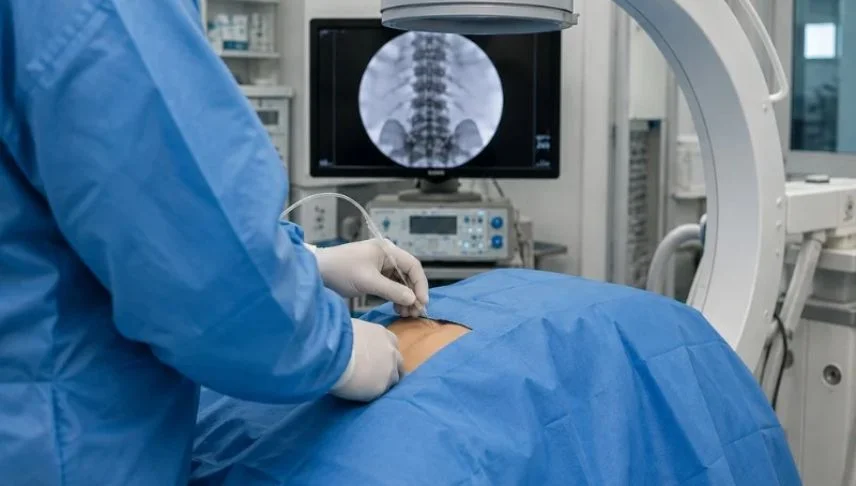
RFA is commonly performed as an outpatient procedure, and RFA treatment in Dallas may be used to target specific pain-carrying nerves based on the patient’s diagnosis. The exact technique depends on the treatment area and nerve location, but the procedure generally follows several key steps.
The patient is positioned so the physician can safely reach the treatment area and guide the needle accurately. Vital signs may be monitored during the procedure for safety.
A local anesthetic is used to numb the skin and deeper tissues around the needle-entry area. This helps reduce pain during needle placement and improves comfort.
A specialized needle is carefully advanced toward the target nerve. Fluoroscopy, a type of real-time X-ray imaging, is commonly used for spinal procedures to confirm the needle position.
Electrical stimulation may be used before treatment to help confirm that the needle is positioned near the intended sensory nerve and away from structures that should not be treated.
An electrode passes through the needle and delivers controlled radiofrequency energy. Heat created in the surrounding tissue produces a small lesion along the targeted nerve. More than one nerve may need treatment depending on which joints are believed to be causing the pain.
Recovery after radiofrequency ablation is usually relatively short because the procedure does not require a large surgical incision or prolonged hospital stay. For patients receiving radiofrequency ablation treatment in Dallas, recovery instructions may vary based on the treatment area, medications, and individual health factors. Patients may experience:
Mild soreness at the needle site
Temporary muscle aching
Temporary numbness
A brief increase in pain before improvement begins
Radiofrequency ablation is a minimally invasive procedure, but like any medical treatment, it has potential risks and benefits. Outcomes vary depending on the pain source, nerve targeted, treatment technique, and individual health factors.
Bleeding
Infection
Temporary numbness
Temporary increase in pain
Nerve irritation
Injury to nearby nerves
May reduce chronic pain
May provide longer-lasting pain relief
Minimally invasive treatment
Short recovery period
May improve movement and daily activity
May help patients participate more comfortably in physical therapy and rehabilitation
Radiofrequency ablation may be recommended when chronic pain can be traced to a specific joint or sensory nerve. A pain management specialist in Dallas may recommend RFA after reviewing symptoms, examination findings, imaging, and the response to diagnostic nerve blocks. Important factors can include:
Chronic pain that continues despite conservative treatment
Symptoms consistent with facet, SI joint, or another treatable pain source
A clinical examination supporting the suspected diagnosis
Appropriate imaging when needed
Meaningful temporary relief after a diagnostic nerve block when applicable
No medical condition that makes the procedure unsafe
The technology behind RFA is important, but an accurate diagnosis is equally important. A radiofrequency device cannot determine which structure is causing pain, so a clinical evaluation and targeted diagnostic testing may be needed to identify the source. For properly diagnosed facet, sacroiliac, or joint-related pain, a radiofrequency ablation procedure may help reduce pain signals for an extended period, although results vary based on the diagnosis, treatment technique, and individual response.
Chronic back, neck, SI joint, or joint pain may need a closer evaluation to identify the exact pain source. Rao K. Ali, MD, Interventional Pain Management Specialist, can review your symptoms and discuss appropriate treatment options. To speak with a pain management doctor in Dallas about radiofrequency ablation, book an appointment with Premier Pain Centers or call 469-562-4188.
Radiofrequency ablation is usually performed with local anesthetic to numb the treatment area. Patients may feel pressure, warmth, tingling, or mild pain during the procedure. Some soreness can also occur afterward, but it is generally temporary and often improves within a few days.
Pain relief after radiofrequency ablation varies from person to person. Some patients may experience improvement for six to 12 months or longer, when others may have a shorter response. Relief can decrease over time as the treated nerve regenerates, and repeat RFA may be considered when clinically appropriate.
Yes. Radiofrequency ablation can be used for certain types of chronic pain, including pain from the facet joints, sacroiliac joints, neck, back, and some arthritic joints. It works by targeting specific nerves that carry pain signals to the brain.
The success of RFA varies based on the pain source, diagnosis, and patient selection. Many patients experience meaningful pain relief for 6 to 12 months, while some may have shorter or longer results.