



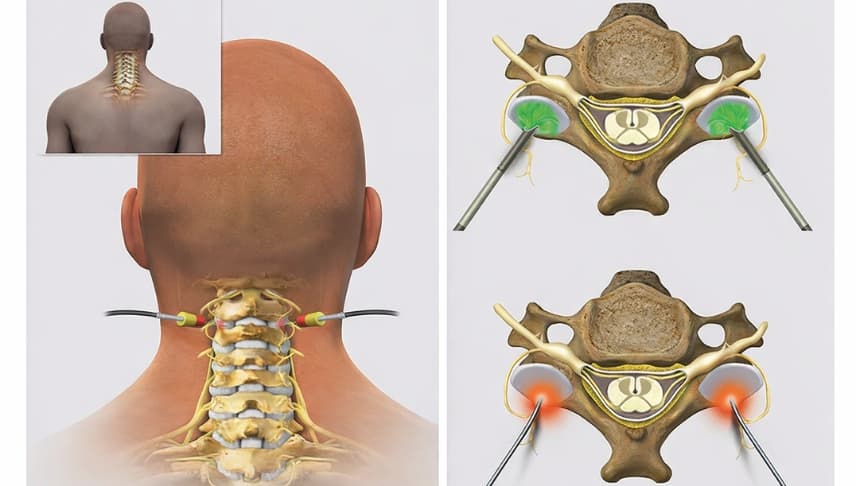
Radiofrequency ablation (RFA) is a minimally invasive treatment that is widely used to help reduce chronic neck pain and certain headache symptoms. It works by applying controlled heat to specific nerve tissues, which helps interrupt pain signals before they continue traveling to the brain. For many patients, it becomes an important option when therapy, medications, or injections only provide short-term relief and the pain keeps returning. In Radiofrequency Ablation for Neck Pain, one reason this treatment is so popular is because relief can last a long time. Since nerves can gradually regenerate, RFA is often effective for about 1 to 2 years, although results vary from person to person. It is typically recommended for patients who respond well to diagnostic medial branch blocks, and in many cases, even one successful block may be enough to confirm that RFA is the right next step for longer-lasting comfort and improved movement. Radiofrequency ablation (RFA) is a minimally invasive procedure used to reduce chronic pain by interrupting pain signals from specific nerves. Instead of masking symptoms with daily medication, it targets the nerve pathways that transmit pain to the brain. This can be especially helpful when the pain is coming from irritated facet joints in the cervical spine. Facet joints are small joints located along the spine that help support movement and stability. Over time, these joints can become inflamed due to arthritis, injury, posture strain, or wear and tear. When that happens, the nerves around the joints may send constant pain signals, causing ongoing neck discomfort and stiffness. Many patients explore radiofrequency ablation for neck pain after conservative treatments stop providing enough relief. RFA is commonly recommended when the pain source is confirmed through diagnostic testing and the symptoms match facet-related pain patterns. Radiofrequency ablation is not for every type of neck pain, but it can be highly effective for the right candidates. It is typically used when pain is linked to facet joint irritation and the medial branch nerves are involved. To confirm the pain source, physicians often use a medial branch block. This is a short-term numbing injection that helps confirm whether the targeted nerves are responsible for the pain. If the block provides strong temporary relief, RFA may be the next step for longer-lasting results. Many patients also search RFA for neck pain near me when they want a non-surgical option with longer relief. Doctors may recommend RFA if your pain: Has lasted longer than three months Feels worse when you rotate or extend your neck Causes stiffness and limited range of motion Returns even after therapy or medications Improves temporarily after diagnostic nerve blocks Most patients are surprised by how quick and simple the RFA process feels. It’s an outpatient treatment, so you can usually return home the same day. The procedure is done with imaging guidance (fluoroscopy/X-ray) to keep everything safe, accurate, and targeted. Many people looking for a radiofrequency ablation specialist in Dallas choose this option because it focuses on precision and long-term relief. You’ll be made comfortable first, and the skin around your neck area will be cleaned carefully. A local numbing medicine is applied so you stay relaxed and feel minimal discomfort during the procedure. A thin, specialized needle is guided toward the exact medial branch nerves near the facet joints. This step is done with careful control so the treatment stays focused on the pain-related nerve pathway. Imaging is used to confirm the needle is in the correct position. This helps the doctor treat the right area and avoid unnecessary irritation to surrounding tissues. Radiofrequency energy is delivered through the needle tip to calm the nerve responsible for sending pain signals. The goal is to reduce pain messages traveling to the brain, which can lead to longer-lasting relief. After the procedure, you’ll rest for a short time and then you can go home the same day. Most patients return to light activity quickly, and results often improve over the following days and weeks. Radiofrequency ablation is popular because it can provide long-lasting relief while avoiding major surgical procedures. It is designed to improve comfort, mobility, and daily function for patients with chronic neck pain. Common benefits include: Longer-lasting relief compared to short-term injections Reduced stiffness and improved neck movement Less reliance on pain medications Minimal downtime and faster return to routine Targeted treatment focused on the pain source Radiofrequency ablation may be a strong option if your neck pain is persistent, limits your daily life, and is linked to facet joint problems. Many patients consider radiofrequency ablation for neck pain when they want a non-surgical solution that offers longer-lasting relief. The best way to know if RFA is right for you is through a proper evaluation, imaging review, and diagnostic testing to confirm the true source of pain. RFA may be a good fit if you have confirmed facet-related neck pain, experienced strong temporary relief from a medial branch block, and want a targeted procedure instead of relying on daily medications. It can also be a helpful option when pain affects sleep, driving, work routine, or basic head movement. However, RFA may not be the best choice if your pain is mainly caused by a disc herniation pressing on a nerve root or if symptoms include severe neurological weakness, which is why an accurate diagnosis is essential before starting treatment. The right pain care can change everything when neck pain won’t let up. A focused plan targets the real cause, not just the symptoms. Accurate diagnosis to identify the true source of neck pain Patient-first approach focused on comfort and safety Modern, minimally invasive treatment options when needed Clear evaluation and step-by-step treatment planning Targeted interventional procedures for longer-lasting relief Support for better movement, function, and daily activity Long-term pain management strategy instead of short-term fixes Trusted care from a Pain Management Specialist in Dallas Helps patients stay active, confident, and in control of recovery Chronic neck pain can slowly take over your routine, making work harder, sleep lighter, and daily movement more uncomfortable than it should be. Real relief isn’t just about lowering pain levels, it’s about restoring flexibility, comfort, and confidence in your body again. When treatment targets the true source of pain, long-term improvement becomes much more achievable. For patients who have already tried therapy, stretching, or medications with limited results, radiofrequency ablation for neck pain may be a strong next step. With a proper evaluation and a personalized treatment plan, many people notice better symptom control and a return to normal activities. If you’re looking for a trusted pain doctor in Dallas, Dr. Rao K. Ali can help you explore the right options for lasting relief.What Is Radiofrequency Ablation?
When RFA Is Used for Neck Pain
How the Procedure Works
1) Preparation
2) Needle Placement
3) Confirmation
4) Nerve Treatment
5) Recovery and Discharge
Benefits of Radiofrequency Ablation for Neck Pain
Is Radiofrequency Ablation Right for You?
Why Choose Dr. Rao K. Ali
Take the Next Step Toward Lasting Neck Pain Relief Today