



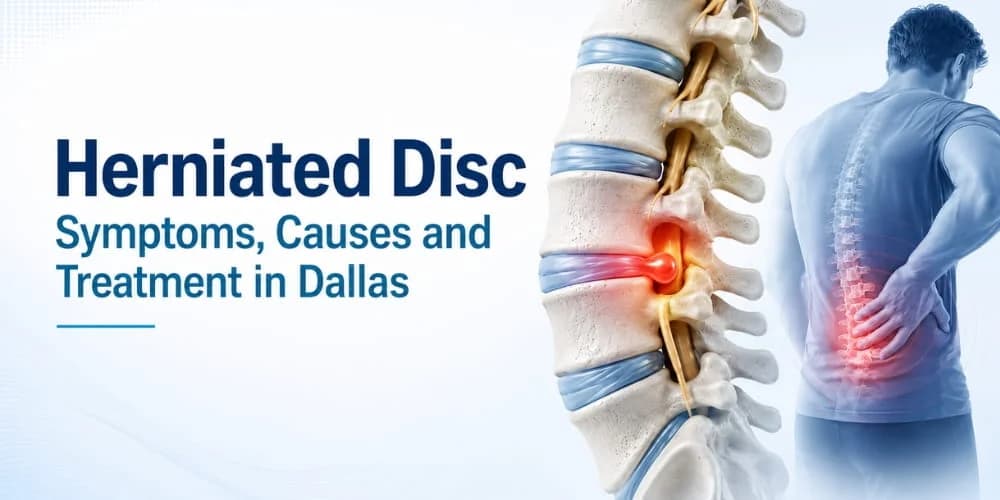
A herniated disc can happen when the soft inner part of a spinal disc pushes through a weak or damaged outer layer. This may occur because of age-related disc wear, poor posture, repeated bending, heavy lifting, twisting injury, excess body weight, or long hours of sitting. When the disc presses on a nearby nerve, it can cause lower back pain, neck pain, leg pain, numbness, tingling, or weakness. Herniated disc symptoms can affect daily life by making it harder to walk, sit, sleep, work, drive, lift objects, or complete normal activities. Studies show that symptomatic lumbar disc herniation has a lifetime risk of about 1–3%, and back pain affects a large number of adults during life. Early care can make a major difference. Dr. Rao K. Ali, board certified interventional pain management, can help diagnose the source of your pain and guide you toward the best treatment options. A herniated disc occurs when the soft inner part of a spinal disc pushes through its outer layer. These discs sit between the bones of the spine and act like shock absorbers, helping the back handle walking, bending, lifting, and daily movement. When disc material irritates or presses on a nearby nerve, pain may spread from the lower back into the hip, leg, or foot. In the neck, symptoms may travel into the shoulder, arm, or hand. Understanding a herniated disc in Dallas can help you notice warning signs early and choose the best path toward relief, better movement, and improved daily comfort. Herniated disc symptoms can be different for each person, depending on the disc location and the nerve being affected. Some pain may stay in the back or neck, when nerve pressure can cause symptoms that travel into the arms, legs, hands, or feet. Common herniated disc symptoms may include: Back pain or neck pain Pain that travels into the leg or arm Sciatica-like pain in the hip, buttock, or leg Numbness or tingling in the arms, hands, legs, or feet Burning, sharp, or electric-like nerve pain Muscle weakness in the affected arm or leg Pain that gets worse when sitting, bending, or lifting Difficulty walking, standing, climbing stairs, or lifting objects Sleep disturbance due to ongoing pain or nerve irritation Reduced comfort during daily movement, work, driving, or routine activities A herniated disc can develop when a spinal disc becomes weak, dry, or damaged over time. When the outer layer loses strength, the soft inner material may push outward and place pressure on nearby nerves. This can lead to back pain, neck pain, sciatica, numbness, tingling, or muscle weakness. As the body gets older, spinal discs naturally lose water content and flexibility. This makes the disc less able to absorb pressure during daily movement. Over time, a weaker disc may tear or bulge outward, increasing the risk of herniation. Disc degeneration is one of the most common reasons a herniated disc develops. When the disc becomes thinner, weaker, or less stable, it may not support the spine properly. This can make the disc more likely to press against nearby nerves. Lifting heavy objects with poor posture can place extra stress on the spine. Bending from the waist instead of using the legs may increase pressure on the discs. A sudden lift or strain can cause the disc material to move out of place. Quick twisting, bending, or turning movements can put uneven pressure on the spinal discs. This may happen during work, exercise, sports, or normal daily tasks. If the disc is already weak, one sudden movement may trigger pain. A car accident, fall, sports injury, or direct impact can damage the spine and discs. Trauma may cause the disc outer layer to tear, allowing the inner material to push outward. Symptoms may start right away or develop over time. Extra body weight can increase pressure on the lower back and spinal discs. This added stress may speed up disc wear and make pain worse during standing, walking, or sitting. Weight-related pressure can also affect spine movement and comfort. Smoking may affect blood flow and reduce the nutrients that spinal discs need to stay healthy. Poor disc nutrition can make discs weaker over time. This may increase the risk of disc degeneration and herniation. Repeated bending, lifting, pushing, pulling, or twisting can slowly strain the spine. Jobs or activities that require the same movements every day may place ongoing pressure on the discs. Over time, this stress can increase the chance of disc damage. Poor posture during sitting, standing, lifting, or working at a desk can place uneven pressure on the spine. Slouching may increase stress on the lower back and neck. Better posture can help reduce unnecessary pressure on spinal discs. Sitting for long hours can increase pressure on the lower spine, mainly when posture is poor. Limited movement may also make the back muscles weaker and less supportive. Regular movement, stretching, and proper sitting position may help reduce spinal strain. Yes, a herniated disc can cause sciatica when disc material presses on or irritates a nerve root in the lower back. The sciatic nerve runs from the lower spine into the buttock, thigh, calf, and foot, so nerve pressure can send pain down the leg instead of staying only in the back. Sciatica from a herniated disc may feel sharp, burning, electric, or shooting. Pain can become worse with sitting, bending, coughing, sneezing, or standing for long periods. A herniated disc in Dallas should be checked when leg pain, numbness, tingling, or weakness starts affecting walking, sleep, work, or daily comfort. Herniated disc treatment usually starts with non-surgical care, depending on pain severity, nerve pressure, and daily activity limits. The goal is to reduce nerve irritation, improve movement, and help the patient return to normal activities with less pain. Physical therapy may help improve flexibility, strengthen the muscles that support the spine, and reduce pressure on the affected disc. A guided exercise plan can also improve posture, balance, and daily movement. Changing painful movements can help reduce stress on the spine. This may include avoiding heavy lifting, repeated bending, twisting, long sitting, or high-impact activity until symptoms improve. Medications may help reduce pain, inflammation, muscle tightness, or nerve-related pain. The best option depends on symptoms, medical history, and how much pain is affecting sleep, work, or daily comfort. An epidural steroid injection may be recommended when a herniated disc causes sciatica, leg pain, or nerve inflammation. The goal is to reduce swelling around the affected nerve and improve sitting, walking, and daily function. Minimally invasive pain management may include targeted image-guided treatments designed to reduce pain without major surgery. These options can be helpful when rest, therapy, and medication do not provide enough relief. You should see a pain management doctor in Dallas if back pain, neck pain, or nerve symptoms last more than 1 to 2 weeks. Pain traveling into the leg or arm may mean a herniated disc is irritating a nearby nerve. Evaluation is important when pain affects walking, sitting, sleeping, working, driving, or daily movement. Early care can help find the pain source and guide the best treatment. Pain lasting longer than 1 to 2 weeks Leg pain, arm pain, or sciatica-like symptoms Numbness or tingling in the hands, legs, or feet Muscle weakness in the arm, hand, leg, or foot Pain that gets worse when sitting, bending, or lifting Trouble walking, standing, sleeping, or working Pain that keeps returning after rest or home care Daily activities becoming difficult because of pain A herniated disc can cause back pain, neck pain, sciatica, numbness, tingling, and weakness that may affect sleep, work, walking, and daily movement. Understanding the symptoms, causes, and treatment options can help you take the best steps before pain becomes more difficult to manage. If you are dealing with a herniated disc in Dallas, early evaluation can help identify the source of nerve irritation and guide a treatment plan focused on pain relief and better mobility. Dr. Rao K. Ali, interventional pain management specialist, provides care for spine-related pain with treatment options based on your condition and symptoms.What Is a Herniated Disc?
Common Herniated Disc Symptoms
What Causes a Herniated Disc?
1. Age-Related Disc Wear
2. Disc Degeneration
3. Heavy Lifting
4. Sudden Twisting or Bending
5. Trauma or Injury
6. Excess Body Weight
7. Smoking
8. Repetitive Stress
9. Poor Posture
10. Long Sitting Lifestyle
Can a Herniated Disc Cause Sciatica?
Herniated Disc Treatment Options
1. Physical Therapy
2. Activity Changes
3. Medications
4. Epidural Steroid Injection
5. Minimally Invasive Pain Management
When Should You See a Pain Management Doctor?
Conclusion