



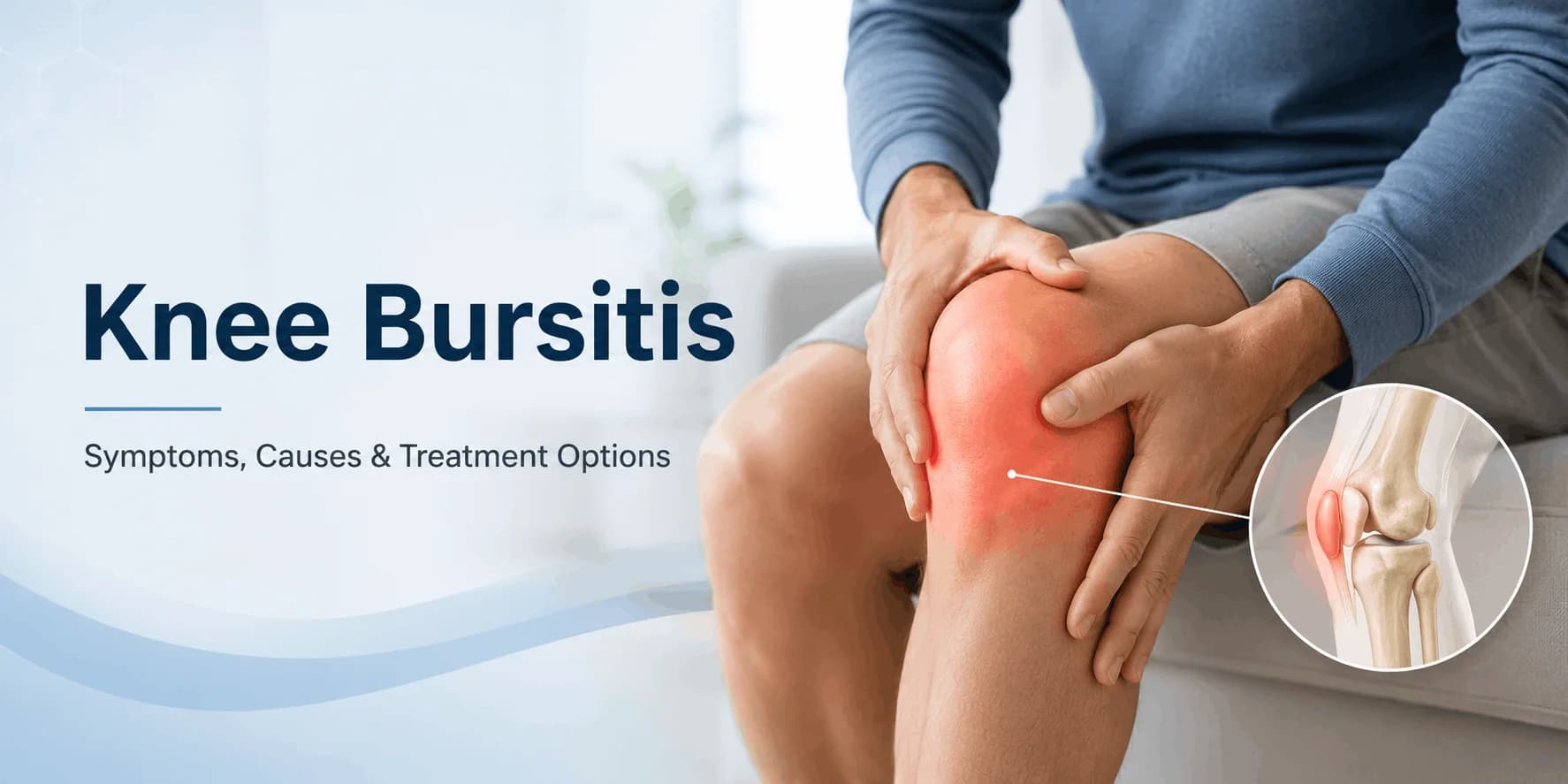
Knee bursitis occurs when a fluid-filled sac around the knee becomes irritated and swollen. Common causes include repeated kneeling, exercise, direct injury, infection, gout, and arthritis. The exact number of cases is difficult to measure because mild symptoms may improve without medical care. Prepatellar bursitis affects about 1 in 10,000 people each year, with greater risk among those who kneel frequently for work. Pain and swelling may start suddenly after an injury or develop slowly from repeated pressure. Symptoms may appear over the kneecap or along the inner side of the knee. Early evaluation can identify the affected bursa, rule out other injuries, and check for infection. Dr. Rao K. Ali is a board-certified interventional pain management physician who evaluates knee and joint pain. Bursae are small fluid-filled sacs that reduce friction between the skin, tendons, muscles, and bones around the knee. Knee bursitis develops when one of these sacs becomes irritated and fills with extra fluid, causing pain, swelling, warmth, tenderness, and limited movement. The condition often affects the area over the kneecap or the inner side of the knee. Bursitis differs from arthritis because arthritis affects the joint and cartilage, but bursitis affects a cushioning sac outside the joint. Both conditions can sometimes cause similar symptoms. The location of pain and swelling often depends on which bursa is inflamed, making an accurate diagnosis important before starting kneecap bursitis treatment in Dallas, TX. Prepatellar bursitis affects the bursa directly in front of the kneecap. It is sometimes called carpet layer’s knee, housemaid’s knee, or carpenter’s knee because it often develops in people who spend long periods kneeling. It may cause a visible, soft swelling over the front of the kneecap. The area can feel warm, tender, or painful when pressure is applied. The infrapatellar bursae are located below the kneecap. Inflammation in this area may cause pain at the front of the knee, below the patella. Running, jumping, frequent kneeling, and repetitive bending may place stress on this area. Pes anserine bursitis affects a bursa located on the inner side of the knee, a few inches below the joint. It is often linked to overuse, arthritis, tight hamstrings, excess body weight, or changes in walking mechanics. The pain may become more noticeable when climbing stairs, standing from a chair, exercising, or lying with the knees pressed together. Its symptoms can resemble a meniscus injury, stress fracture, or medial collateral ligament sprain. This type develops above the kneecap. It may cause swelling, pain, or a soft lump above the patella. It is less common than prepatellar or pes anserine bursitis. Symptoms can differ based on the affected bursa and the cause of inflammation. A direct injury may trigger pain within hours, while repetitive stress can cause symptoms that develop over several days or weeks. Early evaluation can help guide the bursitis treatment in Dallas. Common knee bursitis symptoms include: Localized knee pain Swelling over, below, or inside the knee Tenderness when touching the affected area Warmth around the swollen bursa Stiffness after sitting or resting Pain when kneeling Pain when bending or straightening the knee Pain when climbing stairs Reduced knee movement A soft or fluid-filled lump near the kneecap Pain during exercise or daily activities Different activities and medical conditions can irritate the bursae around the knee. Frequent pressure on the kneecap is one of the leading causes of prepatellar bursitis. Carpet installers, plumbers, gardeners, roofers, mechanics, construction workers, and cleaners may face a higher risk. Running, jumping, squatting, cycling, and repeated stair climbing can irritate a bursa. Increasing exercise intensity too quickly can also place extra strain on the knee. A fall, collision, sports injury, or direct blow to the front of the knee may cause bleeding or fluid buildup inside the bursa. Swelling can appear soon after the injury. Bacteria can enter a bursa through a cut, scrape, insect bite, puncture, or damaged skin. This is called septic bursitis. An infected bursa may become red, hot, painful, and swollen. Fever or chills may also develop. Septic bursitis needs prompt medical treatment because the infection can spread. Osteoarthritis, rheumatoid arthritis, and gout can increase inflammation around the knee. Gout may lead to crystal deposits inside a bursa, causing sudden pain and swelling. Muscle weakness, tight hamstrings, improper footwear, flat feet, and changes in walking or running mechanics may place uneven pressure on the inner knee. Knee bursitis can affect people of any age, but certain factors raise the risk: Jobs that require prolonged kneeling Contact sports and activities involving falls Long-distance running Sudden increases in physical activity Previous knee injury Osteoarthritis or rheumatoid arthritis Gout Excess body weight Tight leg muscles Diabetes A weakened immune system Cuts or skin infections near the knee Previous episodes of bursitis A pain doctor in Dallas may ask when the pain began, which activities worsen it, and if an injury occurred. Both knees may be checked for swelling, warmth, skin changes, and limited movement. The examination helps locate the pain and distinguish bursitis from arthritis, ligament injuries, meniscus damage, or fractures. Imaging is not needed in every case, but it may help rule out other conditions. X-rays: These can identify fractures, bone problems, or signs of arthritis. Ultrasound: Ultrasound can show fluid and inflammation inside a bursa. It may also guide needle placement during aspiration or an injection. MRI: An MRI provides detailed pictures of bursae, tendons, ligaments, cartilage, and other soft tissues. A knee pain specialist in Dallas may insert a thin needle into the swollen bursa to remove a fluid sample. The fluid can then be tested for bacteria, gout crystals, or other signs of inflammation. The knee pain treatment in Dallas depends on the affected bursa, the severity of pain and swelling, and the presence of an infection. Most noninfectious cases improve with conservative care, while severe or recurring symptoms may require medical procedures. The best doctor for bursitis may recommend one or more of the following options: Reduce activities that place pressure on the knee, including kneeling, running, deep squatting, and repeated bending. Short-term activity changes allow the irritated bursa to heal without placing additional stress on the area. Apply a wrapped ice pack for 15 to 20 minutes several times a day. A compression sleeve may help control swelling, while elevating the leg can reduce fluid buildup. Ice should never be placed directly on the skin. Ibuprofen, naproxen, or acetaminophen may help manage pain and inflammation. These medicines may not be suitable for patients with kidney problems, stomach ulcers, heart conditions, or certain medication interactions, so medical guidance is important. Physical therapy may include gentle stretching, strengthening, balance exercises, and movement correction. Strengthening the muscles around the knee and hips can improve stability, reduce pressure on the bursa, and support a safe return to daily activities. When swelling is large or painful, a doctor may use a thin needle to drain excess fluid from the bursa. The fluid may also be tested for infection, gout crystals, or other signs of inflammation. A corticosteroid injection may be considered when rest, medication, and physical therapy do not provide enough relief. The injection helps reduce inflammation but is generally avoided when an infection is suspected. Septic bursitis requires antibiotics to treat the infection. Fluid drainage may also be needed, and severe cases can require intravenous antibiotics or hospital care. Surgery is rarely necessary. It may be recommended for chronic swelling, repeated bursitis, or an infection that does not improve with antibiotics and drainage. Schedule an evaluation with a knee pain doctor near you if pain or swelling continues, keeps returning, limits movement, or makes walking difficult. Medical care is also important after a major injury or when you have diabetes, a weakened immune system, or an uncertain diagnosis. Pain or swelling continues despite rest Symptoms keep returning The swelling increases You cannot bend or straighten the knee normally Walking becomes difficult Pain started after a significant fall or collision You have diabetes or a weakened immune system You are unsure if the pain comes from bursitis, arthritis, or an injury A few changes can lower the risk of inflammation and repeated episodes: Wear cushioned kneepads during work or sports. Avoid kneeling directly on hard surfaces. Take regular breaks from repetitive tasks. Increase exercise intensity in small steps. Warm up before physical activity. Stretch the hamstrings, quadriceps, and calves. Strengthen the muscles around the hips and knees. Maintain a healthy body weight. Use footwear suited to your activity. Clean and cover cuts near the knee. Rest when pain or swelling first appears. Treat arthritis, gout, and other medical conditions properly. Knee bursitis can cause localized pain, swelling, warmth, and difficulty with kneeling, walking, exercise, or stair use. Repetitive pressure, overuse, injury, arthritis, gout, and infection are among its main causes. Most cases respond to rest, ice, activity changes, medication, and physical therapy, but infected or recurring bursitis may require drainage, antibiotics, injections, or surgery. A proper evaluation is important when symptoms continue, limit mobility, or include redness and fever. Identifying the affected bursa and the reason it became inflamed helps guide treatment and reduces the chance of another flare-up. Mild, noninfectious knee bursitis may improve with rest, ice, compression, elevation, and avoiding activities that place pressure on the knee. Medical evaluation is needed when pain or swelling continues or becomes worse. Gentle walking may be safe when it does not increase pain or swelling. Long walks, stairs, hills, running, and other strenuous activities should be reduced until the inflamed bursa begins to heal. Knee bursitis may cause aching, tenderness, warmth, and swelling around the affected area. Pain can become worse when kneeling, bending the knee, climbing stairs, walking, or pressing the swollen area. Yes. Bacteria may enter the bursa through a cut, scrape, or puncture near the knee. Redness, increasing warmth, fever, chills, drainage, or rapidly worsening pain requires prompt medical care. Untreated bursitis may lead to recurring swelling, chronic pain, reduced knee movement, and muscle weakness. An untreated infected bursa can allow the infection to spread to surrounding tissues or other parts of the body.What is Knee Bursitis?
Common Types of Knee Bursitis
Prepatellar Bursitis
Infrapatellar Bursitis
Pes Anserine Bursitis
Suprapatellar Bursitis
What are the Symptoms of Knee Bursitis?
What Causes Knee Bursitis?
Repeated Kneeling
Overuse of the Knee
Direct Trauma
Bacterial Infection
Arthritis and Gout
Poor Movement Mechanics
Who Is at Greater Risk?
How Is Knee Bursitis Diagnosed?
Imaging Tests
Bursa Fluid Aspiration
Knee Bursitis Treatment Options
Rest and Activity Modification
Ice, Compression, and Elevation
Pain and Anti-Inflammatory Medication
Physical Therapy
Bursa Aspiration
Corticosteroid Injection
Antibiotics
Surgery
When Should You See a Doctor?
How Can Knee Bursitis Be Prevented?
Conclusion
Frequently Asked Questions
Can knee bursitis go away on its own?
Is walking good for knee bursitis?
What does knee bursitis pain feel like?
Can knee bursitis become infected?
What happens if knee bursitis is left untreated?