



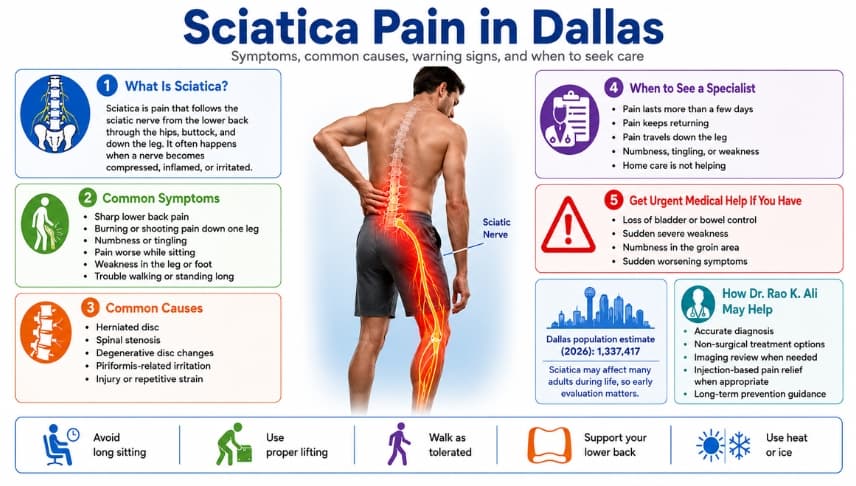
Sciatica can turn simple daily movement into a painful challenge. A person may feel sharp lower back pain, burning down the leg, numbness, tingling, or sudden shooting pain that makes walking, sitting, or driving difficult. For patients dealing with Sciatica Pain in Dallas, getting the right diagnosis matters because the pain often comes from nerve irritation, not just muscle soreness.
Dallas has an estimated 2026 population of 1,337,417, and sciatica is a common nerve-related pain condition. Since medical studies report lifetime sciatica rates around 13% to 40% and annual rates around 1% to 5%, about 173,000 to 535,000 Dallas residents may experience sciatica during life, while 13,000 to 67,000 may face it each year. These estimates highlight the need for timely care from a Dallas sciatica specialist.
Sciatica is pain that follows the path of the sciatic nerve. This nerve starts in the lower spine, moves through the hips and buttocks, and travels down each leg. When the nerve becomes compressed, inflamed, or irritated, pain may travel from the lower back into the thigh, calf, foot, or toes.
Many patients describe sciatic nerve pain as:
Sharp pain from the back into the leg
Burning or electric-like pain
Numbness or tingling
Pain that worsens while sitting
Weakness in the leg or foot
Difficulty walking or standing for long
Some people feel mild discomfort, while others experience severe lower back and leg pain that affects work, sleep, exercise, and routine movement.
Sciatica usually happens when something places pressure on the nerve roots in the lower spine. Dr. Rao K. Ali evaluates the real source of pain before recommending care.
Common causes include:
A herniated disc can press on a nearby nerve root. This is one of the most common causes of sciatica. Patients may feel pain that starts in the lower back and shoots down one leg.
Spinal stenosis means the spinal canal becomes narrow. This can place pressure on nerves and cause pain, numbness, or weakness, especially during walking or standing.
As spinal discs lose height or flexibility, nerve irritation may develop. This can lead to chronic back pain with leg symptoms.
Sometimes the piriformis muscle in the buttock irritates the sciatic nerve. This may cause pain that feels similar to spine-related sciatica.
Work injuries, sports activity, poor lifting habits, prolonged sitting, or sudden twisting can trigger sciatic symptoms.
You should seek care if pain lasts more than a few days, keeps returning, travels down the leg, or causes numbness, tingling, or weakness. Patients searching for a sciatica specialist Dallas TX often need more than basic rest or pain medicine.
See a pain doctor if you have:
Pain spreading from the lower back to the leg
Shooting leg pain that affects walking
Numbness or tingling in the foot
Weakness in the leg
Pain that worsens while sitting
Pain after a disc injury
Symptoms that do not improve with home care
Emergency care may be needed if sciatica appears with loss of bladder or bowel control, sudden severe weakness, or numbness in the groin area.
Dr. Rao K. Ali focuses on identifying the pain source instead of only covering symptoms. Many patients search for the best pain doctor near me because they want clear answers, non-surgical options, and a treatment plan based on their condition.
Patients choose Dr. Rao K. Ali because he provides:
Sciatica can come from a herniated disc, nerve inflammation, spinal stenosis, joint irritation, or muscle-related pressure. Dr. Ali reviews symptoms, medical history, physical findings, and imaging when needed to find the likely cause.
Many sciatica cases can improve with non-surgical care. Treatment may include guided injections, therapy support, medication planning, lifestyle guidance, and long-term pain control strategies.
Sciatica is not only back pain. It often affects the leg, hip, buttock, and foot. Dr. Ali looks at the full pain pattern to guide care.
Every patient’s pain pattern is different. Some have sudden disc-related pain, while others have long-term nerve compression. Dr. Ali builds a plan around symptom severity, activity limits, health history, and response to earlier treatments.
For patients looking for pain management for sciatica Dallas, local access matters. Follow-up visits, treatment monitoring, and ongoing care are easier when the provider understands the needs of Dallas-area patients.
Dr. Rao K. Ali may use several steps to help patients with sciatica.
The visit often starts with questions about where the pain begins, where it travels, what makes it worse, and whether numbness or weakness is present. This helps separate sciatica from hip pain, muscle strain, joint pain, or other nerve conditions.
A physical exam may check strength, reflexes, sensation, walking pattern, and pain triggers. These signs help locate the affected nerve area.
If symptoms suggest disc injury, stenosis, or nerve compression, imaging such as MRI may help confirm the cause. Imaging is most helpful when matched with the patient’s symptoms.
For many patients, sciatica treatment may include conservative care first. This can involve activity changes, anti-inflammatory medication when appropriate, physical therapy guidance, stretching, posture correction, and pain-relieving procedures.
When nerve inflammation is severe, certain image-guided injections may help reduce irritation around the affected nerve. These treatments are often used when pain travels down the leg and does not improve with basic care.
Once pain improves, prevention becomes important. Dr. Rao K.Ali may guide patients on movement habits, lifting posture, weight management, core strength, and follow-up care to reduce flare-ups.
Shooting pain down the leg is one of the most common signs of sciatic nerve irritation. It may feel like an electric shock, burning line, or deep ache that travels from the buttock into the calf or foot.
Patients searching for shooting leg pain treatment Dallas should know that leg pain may come from the spine, not the leg itself. Treating only the leg may miss the real cause. A pain management evaluation helps identify whether the problem is linked to a disc, nerve root, spinal narrowing, or another source.
Yes, many cases of herniated disc sciatica improve without surgery. The body may reduce inflammation over time, and non-surgical pain care can help control symptoms during recovery. However, severe weakness, worsening numbness, or bladder and bowel changes need urgent medical attention.
Dr. Rao K. Ali may recommend non-surgical care when it is safe and appropriate. The goal is to reduce nerve irritation, improve movement, and help patients return to daily activity with less pain.
A strong pain specialist should provide a clear diagnosis, explain treatment choices, review risks, and create a plan based on the patient’s actual symptoms.
Good sciatica care should include:
Clear explanation of the pain source
Non-surgical options when suitable
Follow-up after treatment
Focus on back and leg symptoms
Patient education
Care that supports long-term relief
Dr. Rao K. Ali helps patients understand why sciatica is happening and what steps may help reduce pain.
Home care may help mild symptoms, but it should not replace medical evaluation when pain is severe or persistent.
Helpful habits may include:
Avoid long sitting without breaks
Use proper lifting technique
Walk short distances as tolerated
Avoid heavy bending during flare-ups
Use heat or ice based on comfort
Practice gentle stretching only if it does not worsen pain
Keep the lower back supported while sitting
If symptoms increase during stretching or exercise, stop and speak with a pain specialist.
Sciatica can affect more than physical movement. Patients may sleep poorly, avoid driving, miss work, reduce exercise, and feel frustrated by repeated flare-ups. Long-lasting pain can also affect mood, focus, and daily confidence.
This is why early evaluation matters. Treating sciatica before it becomes chronic may help patients avoid longer recovery periods and repeated pain cycles.
If you are dealing with Sciatica Pain in Dallas, Dr. Rao K. Ali can help evaluate the cause and discuss treatment options for lasting relief. Whether your pain is linked to a herniated disc, sciatic nerve irritation, lower back and leg pain, or shooting pain down the leg, proper care can help you move forward.
Book your appointment with Dr. Rao K. Ali today and take the next step toward sciatica relief in Dallas.
Sciatica often feels like sharp, burning, or electric pain that starts in the lower back or buttock and travels down one leg. Some patients also feel numbness, tingling, weakness, or pain that worsens while sitting, standing, or walking.
You can see a pain management doctor or sciatica specialist for evaluation. Dr. Rao K. Ali helps Dallas patients identify the cause of sciatic nerve pain and offers non-surgical treatment options when appropriate.
Yes. A herniated disc can press on a nerve root in the lower spine, causing pain that travels into the buttock, thigh, calf, or foot. This is one of the most common causes of sciatica.
No. Shooting leg pain can come from sciatica, but it may also be linked to hip problems, muscle irritation, vascular issues, or other nerve conditions. A proper exam helps confirm the source.
The best treatment depends on the cause. Options may include medication support, physical therapy, activity changes, image-guided injections, and pain management care. Dr. Rao K. Ali recommends treatment based on diagnosis and symptom severity.
Seek urgent medical help if sciatica comes with loss of bladder or bowel control, severe leg weakness, numbness in the groin area, fever, or sudden worsening symptoms. These signs may point to a serious condition.
Patients choose Dr. Rao K. Ali because he focuses on accurate diagnosis, non-surgical pain care, and treatment plans for lower back and leg pain. His approach helps patients understand the cause of pain and available relief options.