



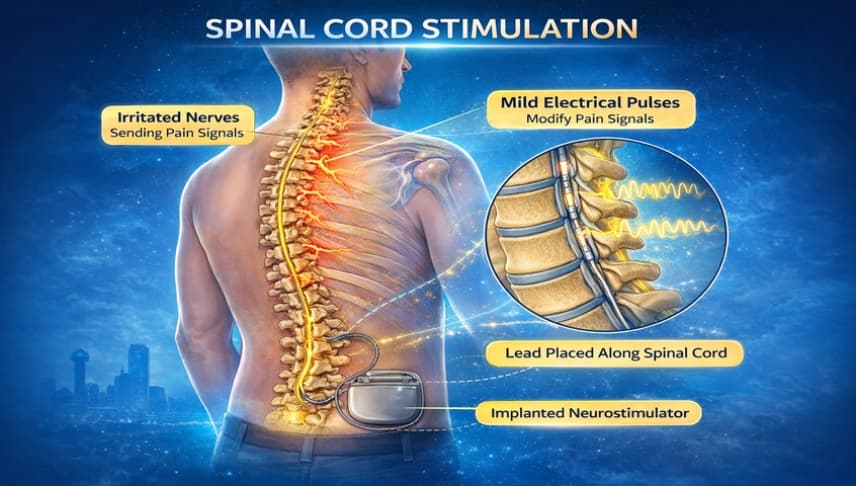
A spinal cord stimulator is a small implantable medical device used to help manage chronic pain by altering how pain signals are transmitted to the brain. It works by sending gentle electrical impulses to targeted nerves along the spinal cord, which can reduce or mask pain sensations before they are fully felt. This treatment is often recommended for patients who continue to experience pain despite medications, physical therapy, or other non-surgical options, offering a long-term approach to pain control without heavy reliance on drugs.
Spinal cord stimulation (SCS) is an effective option for people with ongoing back, leg, arm, or nerve pain that doesn't respond well to medications, physical therapy, injections, or other standard treatments. Dr. Rao K. Ali, a board-certified interventional pain management specialist in the Dallas-Fort Worth area, commonly recommends SCS for the following chronic pain conditions after a thorough evaluation:
Steady or ongoing pain in the lower back that often spreads down to the legs (like sciatica). It can make walking, sitting, or standing hard. SCS helps calm the nerve pain so daily activities feel easier.
A serious nerve problem that causes very strong pain, swelling, changes in skin color or temperature, and extreme sensitivity (usually in an arm or leg after an injury). SCS works to quiet the overactive nerves and reduce the severe symptoms.
Damage to the nerves outside the spine and brain, often from diabetes, injuries, infections, or other causes. It leads to burning, tingling, numbness, or sharp/shooting pain in the hands, feet, arms, or legs. Spinal Cord Stimulation can lower these uncomfortable nerve feelings.
Swelling and scarring around the protective covering of the spinal nerves (the arachnoid layer). This causes constant, hard-to-treat pain in the back or legs. SCS helps by reducing the irritation on those nerves.
Sometimes, pain does not go away or even gets worse after someone has had back or spine surgery. In such cases, spinal cord stimulation may provide targeted relief without requiring another major procedure.
Long-term pain in the neck that spreads to the shoulders, arms, or hands, usually caused by pinched or damaged nerves in the neck area, can be hard to manage when medicines, physical therapy, shots, or other treatments do not give lasting relief. For people seeking neck pain treatment in Dallas TX, spinal cord stimulation (SCS) may be a good option in these cases to help block the pain signals and improve daily comfort.
Here are the main ways a spinal cord stimulator can help people with tough, long-term pain:
It often cuts chronic back, neck, leg, or nerve pain by 50% or more, so the pain feels much less intense and doesn't last as long every day.
Most people end up needing less medicine (especially strong ones like opioids), which means avoiding side effects, feeling less foggy, and lowering the risk of dependency.
No major open surgery is needed, just small cuts to place the device, and there's always a trial period first to make sure it works before anything stays in permanently.
With less pain getting in the way, people can walk longer distances, sleep better, handle schoolwork or chores, and spend time with friends without hurting as much.
It allows patients to control the settings. It has a simple handheld remote that lets the person turn the stimulation up or down or change programs to match how they're feeling that day.
Many patients say they have more energy, feel happier, sleep better, and enjoy things again because the pain isn't controlling everything anymore.
Results aren't the same for everyone, but for those who get good relief from the trial, it can bring real, lasting improvement when other treatments haven't worked.
Spinal cord stimulation (SCS) basically tricks the nerves so pain doesn't feel as bad when it gets to the brain. Here's how it goes down, step by step, in plain words:
When nerves are hurt or irritated for a long time, they keep firing off pain signals up the spinal cord straight to the brain. That's why the pain feels nonstop like burning, stabbing, or pins-and-needles that won't quit.
Thin wires (called leads) get placed right near the spinal cord. The device sends small, gentle electrical pulses to those exact spots on the spine.
Those pulses work kind of like closing a door (or "gate") on the pain highway in the spinal cord. The good signals from the stimulator push the pain signals aside or replace them with a soft buzzing or tingling feeling instead.
Because the pain messages get weakened or blocked, the brain doesn't get hit with the full blast. A lot of patients end up feeling way less of the sharp, shooting, or burning pain, sometimes cut in half or more.
With the pain turned way down, it's easier to walk, sleep through the night, do homework, play sports, or just hang out without hurting all the time. Pain doctors in places like Dallas help people use it to get back to doing the stuff they want.
Chronic pain can really mess with everything. It makes simple stuff like walking to class, hanging out with friends, or even sleeping feel impossible, and it just wears you down day after day. If you're dealing with that kind of ongoing back pain, neck pain, leg pain, or nerve pain that won't let up, and nothing else has worked, it's smart to look for a solid spinal cord stimulator doctor near you who actually knows what he's doing.
In the Dallas area, a lot of people turn to Dr. Rao K. Ali at Pain Doctor in Dallas. He is a board-certified specialist who helps patients from Dallas, Richardson, Plano, and the surrounding Northern Texas areas. He doesn't rush into anything; he does the full check we talked about earlier, including that trial period, so you only move forward if it really helps. For many, it ends up being the thing that lets them get back to moving easier, feeling better, and actually enjoying life again instead of letting pain run the show.
Schedule a consultation to learn more about spinal cord stimulator options and other pain management approaches designed to support long-term comfort and improved quality of life.
This therapy is commonly used for chronic back and leg pain, failed back surgery syndrome, sciatica, peripheral neuropathy, CRPS, and persistent nerve pain that has not improved with other treatments.
Many patients experience noticeable pain reduction and improved daily function. Effectiveness is usually confirmed through a temporary trial before long-term treatment is considered.
As with any minimally invasive procedure, risks may include infection, bleeding, or device-related issues. Serious complications are uncommon when proper evaluation and follow-up are done.
Battery life varies based on usage and device type. Some batteries last several years, while rechargeable options may last longer with regular charging.
Battery replacement is typically a minor procedure. The existing system is adjusted without changing the entire device.